BUSINESS
Sensex Falls 800 Points As Oil Surges Above $110, Trump Warns Iran “Clock Is Ticking”
MyDigiFolio Editors
2 min read
BUSINESS
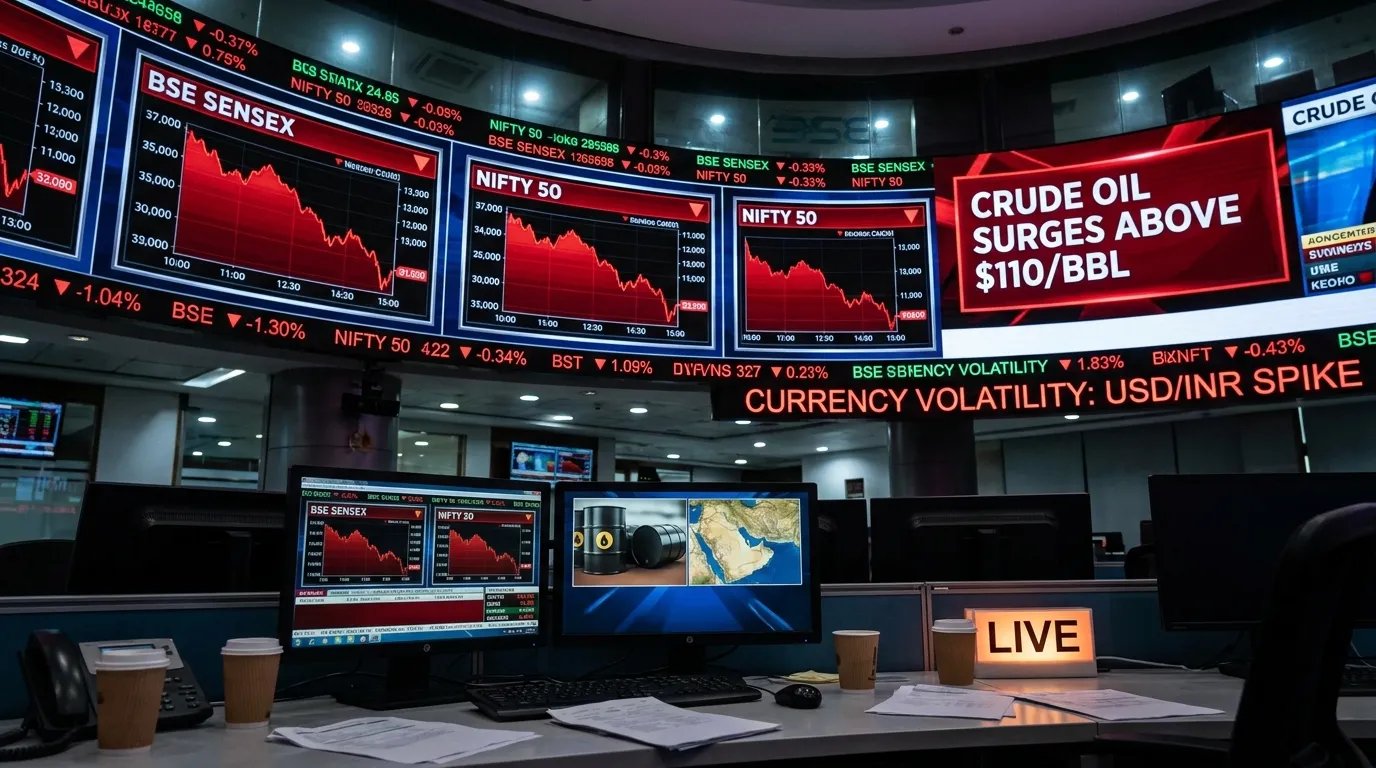
The latest market decline highlights how sensitive global markets remain to oil supply risks and geopolitical tensions. For India, rising crude prices and a weakening rupee create a difficult mix of inflation pressure, import costs, and foreign investor uncertainty. Defensive sectors like telecom, IT, and pharma are currently attracting safer capital flows while investors wait for clarity on the Middle East situation.
Indian stock markets opened sharply lower on Monday as rising geopolitical tensions in the Middle East triggered heavy selling across equities.
At market open:
The selloff came after:
The Indian rupee also weakened further, opening at:
marking another record low.
Why Markets Are Falling
Markets reacted negatively after:
warned that:
raising fears of:
Since India imports nearly:
rising oil prices directly increase:
Sectors In Focus
Analysts say investors are shifting toward:
Telecom Stocks
Telecom companies are being viewed as:
due to:
IT Companies
Tata Consultancy Services was highlighted as a:
because IT exporters benefit when:
Pharma Sector
Pharma stocks are also attracting attention because:
Commodity Plays
Vedanta was identified as a potential beneficiary because:
Key Risk Ahead
Market experts say the biggest factor to watch now is:
Any major escalation could:
However, if tensions ease and oil prices fall back below:
markets could quickly rotate back toward:

Reuters · 3 days ago
Australia's stronger-than-expected job growth highlights continued resilience in its labour market despite higher borrowing costs. With infl...

Reuters · 4 days ago
Australia's latest employment report showed continued strength in the labour market, with job creation well above forecasts and unemployment...

Reuters · 4 days ago
Macquarie has opted for an internal leadership transition by promoting Greg Ward, signalling continuity in its business strategy. The bank a...
From MyDigiFolio
One profile. Resume, vCard, portfolio, and email signatures — all generated in 3 minutes.
Build your page — freeWe use essential cookies for login and preferences, and optional cookies for analytics. Privacy policy.