AI & TECH
AI Now Handles Over One-Third of Entry-Level Tasks in India, Study Finds
MyDigiFolio Editors
2 min read
AI & TECH
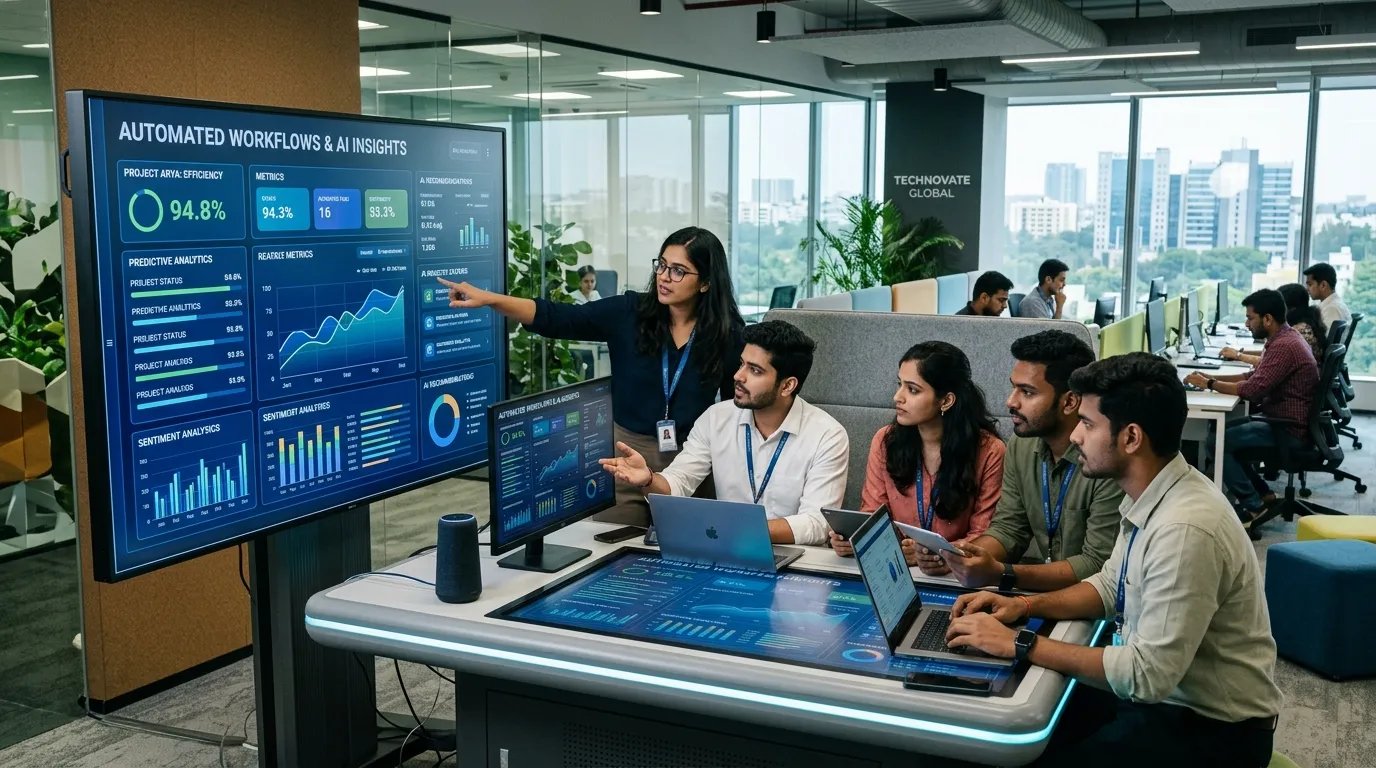
A new study suggests AI is increasingly taking over routine entry-level tasks in India, accelerating changes in how organizations hire and train young professionals. Employers are placing greater value on human judgment, adaptability, and AI oversight skills as workplace roles evolve.
Artificial intelligence is rapidly transforming the nature of entry-level jobs in India, with a new industry study indicating that AI is now responsible for a significant share of routine work previously handled by early-career employees.
The research found that India is experiencing faster adoption of AI in junior-level roles than the global average, highlighting how organizations are reshaping workforce expectations and job responsibilities.
Rather than focusing primarily on repetitive administrative tasks, future entry-level employees are expected to spend more time overseeing AI-generated outputs, reviewing results, identifying exceptions, and making judgment-based decisions when human intervention is required.
Employers surveyed in the study believe that many junior positions will evolve into roles centered on collaboration between people and AI systems over the next several years. At the same time, many organizations expect entirely new categories of entry-level jobs to emerge as AI adoption expands.
The report also points to a growing appreciation for broader skill sets. Many hiring leaders now value critical thinking, communication skills, adaptability, and interdisciplinary education as organizations seek employees who can effectively work alongside intelligent technologies.
Training remains a major challenge. Companies are reporting increased employee interest in AI-related learning and development, but many organizations acknowledge that their training programs are struggling to keep pace with the speed of technological change.
The study also highlights the importance of middle management in helping teams adopt and use AI tools effectively, suggesting that successful AI integration will depend on both technology investments and workforce development strategies.
As businesses continue to incorporate AI into daily operations, the focus is increasingly shifting toward preparing employees for a workplace where human expertise and artificial intelligence operate together.
Moneycontrol · 3 days ago
Young workers appear to be facing a greater impact from AI-related changes in hiring, particularly in occupations where more tasks can be au...
Reuters · 3 days ago
Meta's attempt to rapidly reshape its workforce around AI faced resistance from employees and challenges with the technology itself. The com...
ABC11 / WTVD · 6 days ago
AI is beginning to influence not only how work is performed but also the career and education choices people make before entering the workfo...
From MyDigiFolio
One profile. Resume, vCard, portfolio, and email signatures — all generated in 3 minutes.
Build your page — freeWe use essential cookies for login and preferences, and optional cookies for analytics. Privacy policy.