CAREERS
US Job Openings Surge to Near Two-Year High, But Hiring Remains Sluggish
MyDigiFolio Editors
2 min read
CAREERS
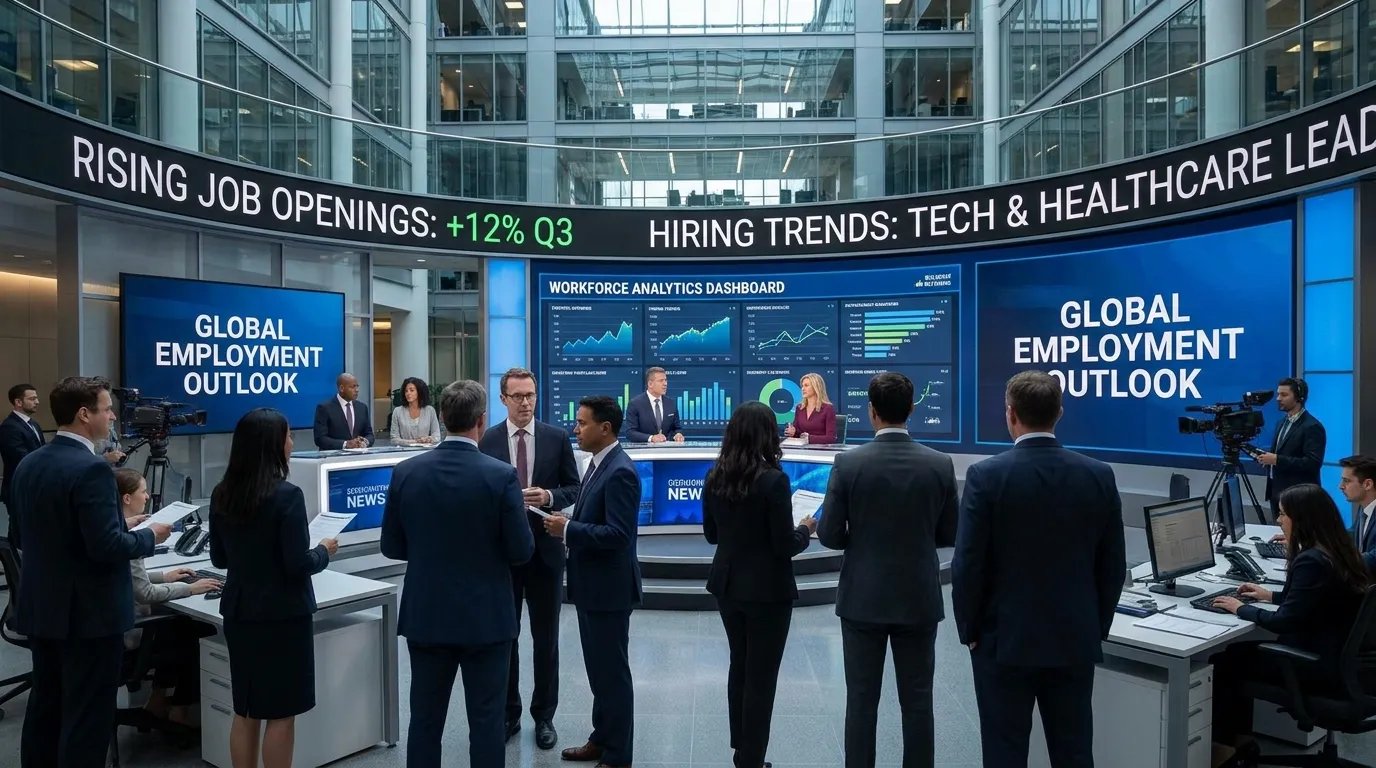
The latest U.S. labor market data presents a mixed picture: job openings rose sharply, but actual hiring slowed and worker confidence weakened. Employers continue to hold onto staff while remaining cautious about expanding their workforce amid economic uncertainty and geopolitical tensions.
The U.S. labor market delivered conflicting signals in April as job openings surged to their highest level in nearly two years while hiring activity weakened and worker confidence continued to decline.
According to the latest Job Openings and Labor Turnover Survey (JOLTS), employers reported 7.62 million open positions during April, representing an increase of 731,000 vacancies compared to the previous month. The rise marked the largest monthly increase in job openings since 2021 and significantly exceeded economist expectations.
Despite the increase in available positions, businesses showed little urgency to expand their workforce. Hiring activity fell by 419,000 to just over 5.1 million hires, reflecting ongoing caution among employers facing economic uncertainty and rising operating costs.
Analysts noted that much of the increase in job openings was concentrated within the professional and business services sector, raising questions about whether the surge accurately reflects broader labor market strength. Some economists believe future revisions could moderate the reported increase.
Healthcare, social assistance, manufacturing, construction, transportation, and utility sectors also reported additional vacancies, indicating continued demand for workers across several industries. However, financial services, retail trade, and hospitality sectors experienced declines in job openings.
One of the most significant indicators of labor market sentiment came from worker behavior. Resignations fell to their lowest level since the height of the COVID-19 pandemic in 2020. Economists often view resignation rates as a measure of employee confidence, with fewer workers voluntarily leaving jobs suggesting increased concern about finding new employment opportunities.
The report also showed that layoffs declined during April, providing some stability despite weaker hiring. Employers appear reluctant to reduce staff levels significantly, maintaining what economists describe as a “slow-hire, slow-fire” labor environment where both companies and workers are avoiding major employment changes.
Economic uncertainty remains a key factor influencing business decisions. Rising commodity prices, higher energy costs, and geopolitical tensions have created challenges for employers attempting to forecast future demand and workforce requirements.
Market observers expect job growth to continue at a moderate pace in the coming months, though hiring activity may remain constrained if economic conditions fail to improve. Employers are increasingly balancing labor needs against concerns about inflation, operational costs, and broader global uncertainties.
While the rise in job openings suggests labor demand remains present, the decline in hiring and reduced worker mobility indicate that both businesses and employees are taking a cautious approach as they navigate an evolving economic landscape.

Reuters · 22 hours ago
IG Group is preparing for a significant workforce reduction as it restructures its organisation to improve efficiency. The reported cuts fol...

Financial Express · 22 hours ago
AI is reshaping jobs and creating higher pay opportunities for professionals who can apply the technology effectively. In India, the stronge...

Financial Express · 22 hours ago
The fee amount for H-1B and L-1 petitions remains unchanged, but the payment requirement has been expanded. Covered employers must now accou...
From MyDigiFolio
One profile. Resume, vCard, portfolio, and email signatures — all generated in 3 minutes.
Build your page — freeWe use essential cookies for login and preferences, and optional cookies for analytics. Privacy policy.