CAREERS
GCCs Expected to Increase Fresher Hiring by 12% Despite AI-Led IT Slowdown
MyDigiFolio Editors
2 min read
CAREERS
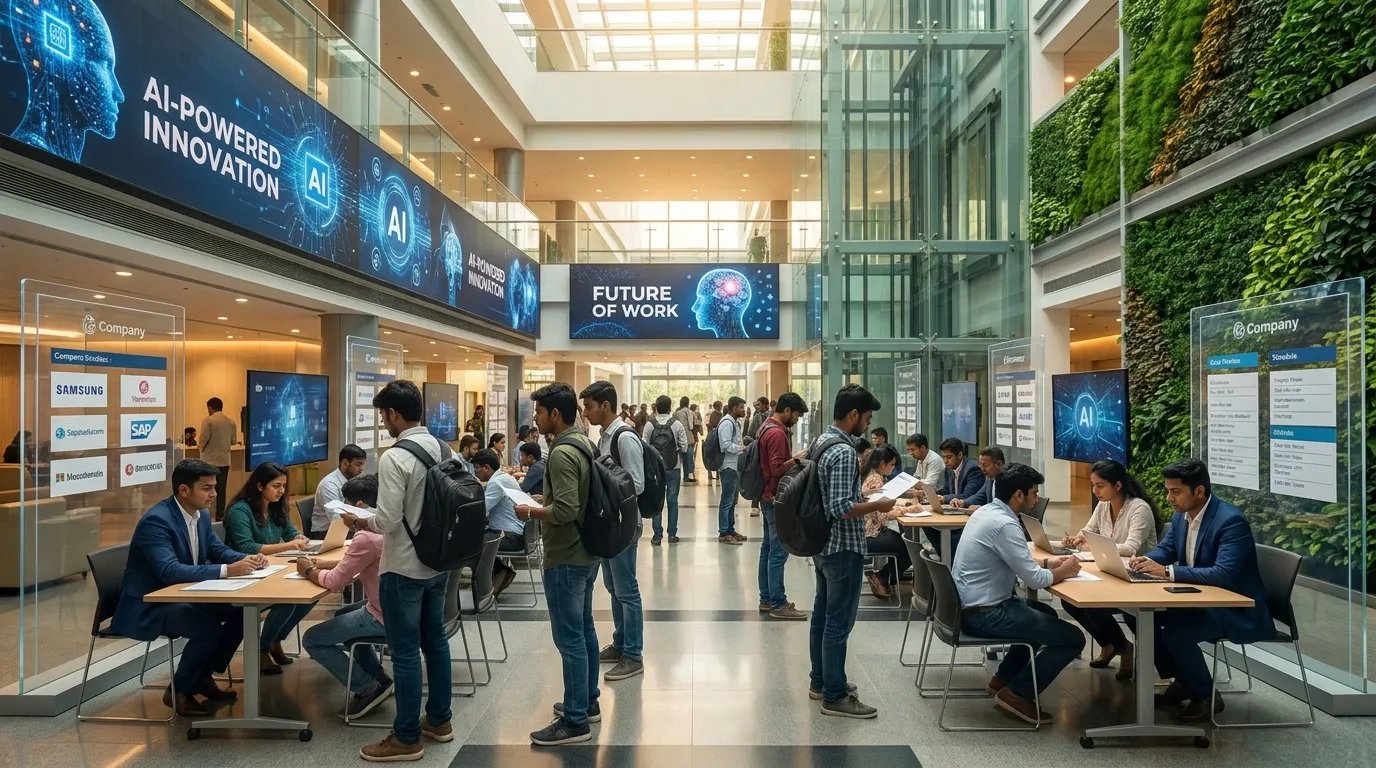
India’s GCC ecosystem is increasingly becoming the preferred destination for tech graduates as multinational companies focus on specialised AI-ready talent instead of mass hiring. The shift signals a major transformation in the country’s technology employment landscape, where skill quality and AI adaptability are becoming more important than workforce size alone.
Global Capability Centres (GCCs) in India are expected to significantly increase fresher hiring during FY27, even as the broader IT services sector faces slower recruitment growth due to rising AI automation and cost optimisation strategies.
According to a TeamLease Digital study shared with The Economic Times, GCCs are projected to boost fresher hiring by nearly 12% this fiscal year, highlighting a widening gap between traditional IT services firms and multinational capability centres operating in India.
The report revealed that annual fresher hiring across GCCs reached nearly 1.4 to 1.5 lakh positions in FY26, driven by the launch of more than 100 new centres and the expansion of existing operations across India’s tier-1 and tier-2 cities.
In contrast, India’s traditional IT services sector witnessed an estimated 11% decline in fresher recruitment during FY26, as artificial intelligence increasingly automates entry-level tasks such as coding support, software testing, and technical maintenance operations that historically absorbed large numbers of graduates.
The salary gap between GCCs and conventional IT services companies is also expected to widen further. Entry-level annual salaries at GCCs are projected to rise by nearly 50% to approximately ₹7.5 lakh per annum, while fresher salaries in IT services firms are expected to remain stagnant at around ₹4.5 lakh annually.
Major multinational employers including Goldman Sachs and JPMorgan Chase confirmed they are continuing aggressive campus hiring strategies in India. Goldman Sachs India stated that the company has consistently hired nearly 600 freshers annually from more than 100 educational institutions across engineering and business disciplines over the last three years.
Industry experts say companies are no longer hiring freshers purely as low-cost talent but are instead focusing on AI-fluent candidates capable of adapting to evolving technology ecosystems. Organisations are increasingly prioritising skills related to artificial intelligence, cybersecurity, cloud infrastructure, digital engineering and advanced data systems.
The report also highlighted that lateral employee movement from IT services companies to GCCs is creating fresh demand for entry-level talent pipelines, with companies backfilling positions at junior levels while expanding into emerging talent hubs across smaller cities.
Executives believe the traditional revenue-to-headcount growth model in the IT industry is rapidly changing as AI tools improve productivity and reduce dependency on large engineering teams. This transformation is reshaping hiring priorities, workforce structures and compensation strategies across India’s technology employment ecosystem.
The findings come at a time when India produces nearly 1.5 million computer science and IT graduates annually, intensifying competition for specialised AI-enabled roles in the evolving job market.

Reuters · 3 days ago
Spain's labour minister is preparing to challenge the current ILO chief in this year's leadership election while the organisation faces grow...

Reuters · 3 days ago
Centrica is reducing its workforce as weaker earnings, market volatility, and operational challenges weigh on its business. The company says...

Reuters · 3 days ago
The latest labor market data suggests layoffs remain limited and employment conditions continue to hold steady. A resilient job market is st...
From MyDigiFolio
One profile. Resume, vCard, portfolio, and email signatures — all generated in 3 minutes.
Build your page — freeWe use essential cookies for login and preferences, and optional cookies for analytics. Privacy policy.