TOP STORIES
Europe’s AI Ambitions Risk Bottleneck as Fibre Spending Captures Barely 1% of $700 Billion Capex
MyDigiFolio Editors
2 min read
TOP STORIES
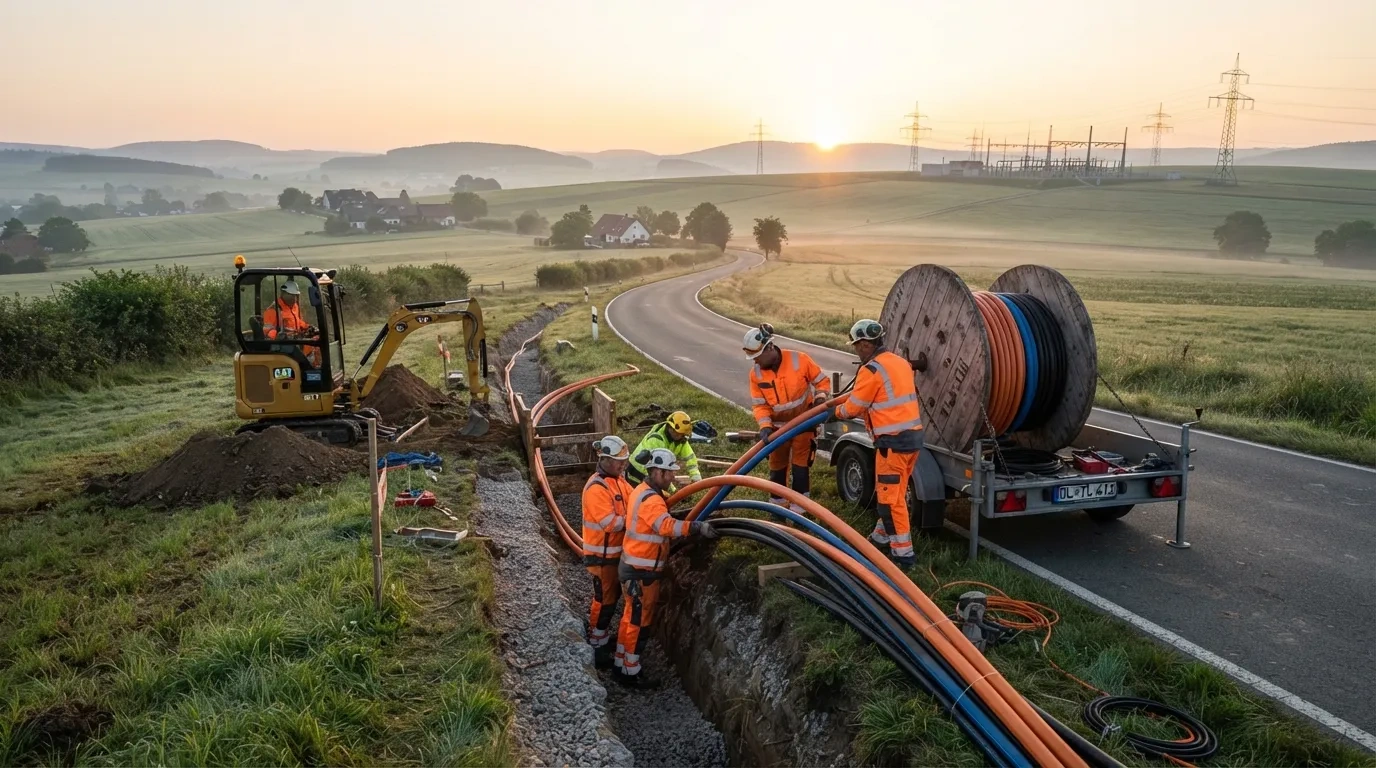
Europe's artificial intelligence roadmap faces a severe infrastructure bottleneck due to underfunded and delayed fibre optic deployment, industry leaders warned at Capacity Europe 2026. While hyperscalers poured over $700 billion into AI infrastructure through 2026, barely 1% was allocated to connectivity. As developers build computing sites near remote nuclear facilities to bypass urban power shortages, the lack of long-haul fibre risks leaving multi-billion-dollar campuses stranded.
While the artificial intelligence sector has spent the past two years consumed by power availability and transformer shortages, an equally dangerous blind spot has emerged across the European continent: a critical deficit in high-capacity fibre-optic infrastructure.
Speaking at Capacity Europe 2026, network and cloud architects from Oracle, TELXIUS, SIPARTECH, and euNetworks sounded the alarm that Europe's AI ambitions could stall unless connectivity evolves at the same breakneck pace as compute and electrical procurement.
The 1% Infrastructure Imbalance The core of the problem lies in an extreme capital allocation mismatch across hyperscale budgets:
The $700 Billion Blind Spot: Global hyperscalers have directed more than $700 billion into digital infrastructure through 2026, yet only 1% of that capital has targeted network connectivity, according to Monica Martinez Quero, Chief Marketing Officer at TELXIUS.
The "Two Cans and String" Reality: Telecom leaders cautioned that without robust backhaul routing, high-density GPU campuses cannot communicate or ingest distributed training sets. If the 1% connectivity layer fails to materialize, the remaining 99% of compute infrastructure sits idle.
"If that 1% doesn't exist, then the 99% is not going to work. Connectivity cannot be left as an afterthought." — Monica Martinez Quero, CMO, TELXIUS
Going Off-Grid: The Nuclear Pivot Urban power grids in primary data center markets have become so severely congested that developers are relocating to the periphery:
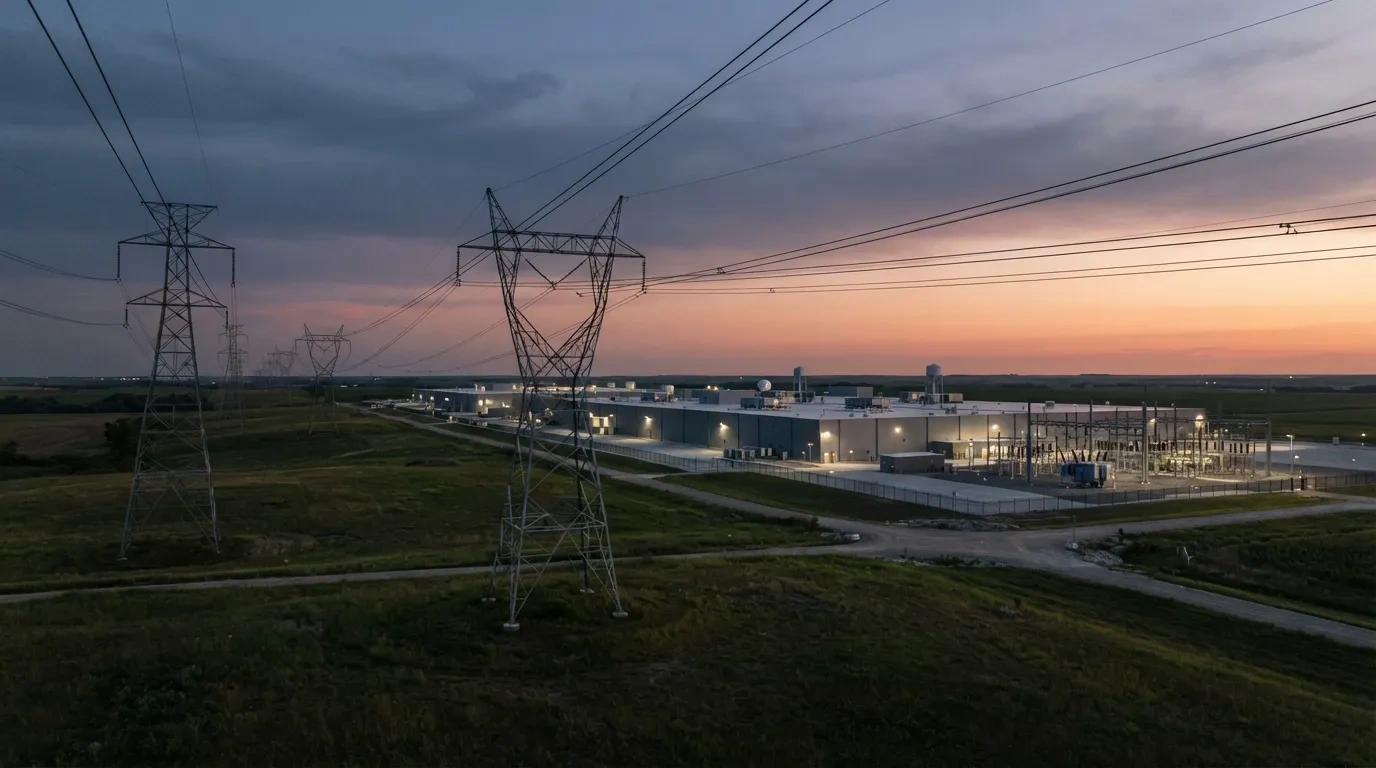
Chasing Nuclear Capacity: To secure uninterrupted megawatt capacity, hyperscalers are increasingly constructing campuses adjacent to operational nuclear power stations, often situated in remote, rural areas.
The Rural Connectivity Divide: Vincent Rousseau, Deputy Director of Operations at SIPARTECH, highlighted that these off-grid locations require extensive, brand-new dedicated fibre trunks to link back to major metropolitan aggregation nodes.
Lead Times and Red Tape: Deploying intercity optical routes demands complex civil engineering, long-haul trenching, and lengthy municipal permitting processes—timelines that Shaunak Thakkar, cloud infrastructure lead at Oracle, noted are routinely underestimated by data center developers.
Inference as Europe's Competitive Moat Despite these physical bottlenecks, panellists argued Europe maintains an opening to dominate the next wave of computing: real-time AI inference.
Unlike foundation model pre-training, which can occur asynchronously in isolated geographic pockets, agentic inference demands sub-millisecond proximity to corporate headquarters and end-users. Industry leaders project that traditional tier-one FLAP-D hubs—Frankfurt, London, Amsterdam, Paris, and Madrid—will remain critical command centers for low-latency inference routing, provided operators and hyperscalers coordinate long-term bandwidth investments before capacity crunches hit.
Business Standard · 1 week ago
The US Senate voted 73-25 to advance landmark bipartisan permitting reform designed to break years-long interconnection bottlenecks for powe...

Business Standard · 1 week ago
The era of unrestricted corporate API usage is giving way to strict unit economics as Amazon, Microsoft, Meta, and Uber push back against "t...
Business Standard · 1 week ago
Technology recruitment across India's Global Capability Centres (GCCs) fell 3.5% sequentially in Q2 FY27 as multinational parent firms shift...
From MyDigiFolio
One profile. Resume, vCard, portfolio, and email signatures — all generated in 3 minutes.
Build your page — freeWe use essential cookies for login and preferences, and optional cookies for analytics. Privacy policy.